Jordan: The 13 most important Archaeological Tourist places to visit
March 29, 2024
Tourism in Jordan

Jordan is famous for its stunning natural beauty, especially in the spring. It contains the most famous archaeological sites in the world, such as the Roman Amphitheater, Wadi Rum, the Dead Sea, and the city of Petra, which contains many archaeological monuments. As well as the Aqaba region, which is the most lively destination in Jordan and the best place for recreation and practicing water activities such as swimming. It is the best place for medical tourism in the hot springs in Hammamet Ma’in. Jordan is considered the most famous place to attend major celebrations and festivals at the Jerash Theater in the summer. In addition to many major commercial centers, popular markets, luxury hotels and restaurants in most regions of the country.
A list of the best tourist archaeological sites in Jordan
Wilson Travel & Tourism Company presents to you a distinguished list carefully selected by our team for the best tourist archaeological site located in the State of Jordan. We have chosen this list according to the classifications and opinions of visitors to the country and their evaluation to help you better plan your trip.
1- South Gate

Two hundred meters north of the Hippodrome lies the imposing South Gate, which was probably built in AD 130 and was originally one of four entrances along the city walls. It is an architectural masterpiece measuring 3 meters thick and 3.5 kilometers long. Don’t forget to look up as you pass under the South Gate! The columns also carry elaborately carved decorations in the form of tree leaves and majestic birds.
Place address: 20 69, Jarash, Jordan
2- Cemetery of obelisks

Do not miss visiting the obelisk tombs in Petra, where the monuments are unique. The tomb of the obelisk was built in the first century BC in Petra. It is an elaborate two-story tomb carved into solid rock and its facade is an elaborate mixture of Egyptian, Greek, Indian and Nabataean architectural styles. It is noteworthy that the Obelisk Tomb is surmounted by four obelisks, and thus acquired this name.
3- La Storia Tourism Complex

The La Storia Tourist Complex is located near Mount Nebo in the city of Madaba. It is a history and culture museum for the region with plastic models depicting the past in Jordan, in addition to a café, a gift shop, and a charming view. The museum was established in 2011 and is the first museum of its kind in Jordan and the Middle East. It is added to the good tourist attractions that are offered in Jordan. It contains an attractive mix of Jordanian religious, historical and popular heritage and focuses on encouraging tourism in Jordan with a special focus on Madaba. The museum has succeeded in attracting tourists and locals alike, and educating them about Jordanian culture in an innovative and highly interactive way where visitors can go on an exciting journey through history, showcasing the religious, historical and cultural heritage of Jordan and the region.
Place address: La Storia Tourism Complex, Mount Nebo, Madaba / Mount Nebo, Jordan
4- Winged Lion Temple
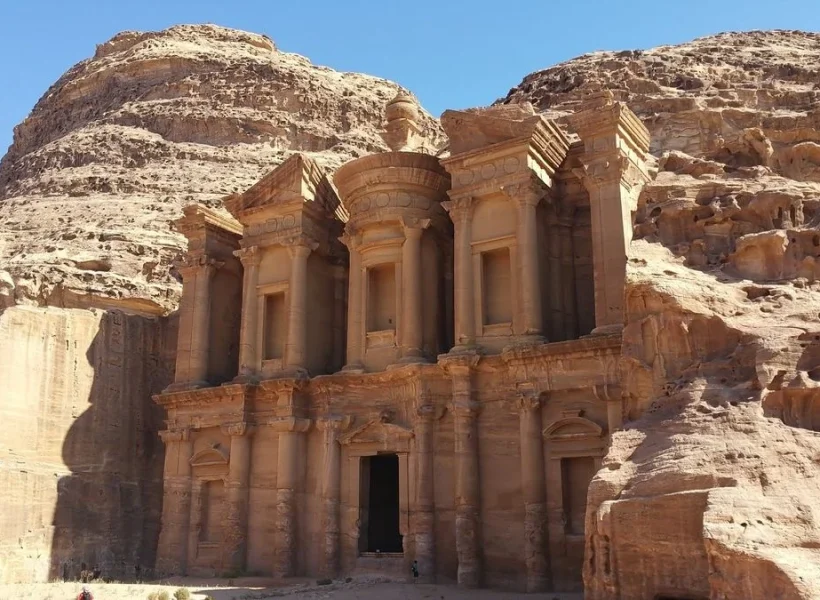
The Temple of the Winged Lions was built on a promontory overlooking the city center. It is a majestic sacred complex that includes a huge staircase, a grand entrance surrounded by giant columns, and an inner room with a raised platform amid a group of columns decorated with statues of “winged lions,” hence the name. The walls and columns of the inner temple are painted with bright colors and cheerful designs, while small niches surrounding the platform hold idols symbolizing the Nabataean goddess.
5- Al-Khazneh
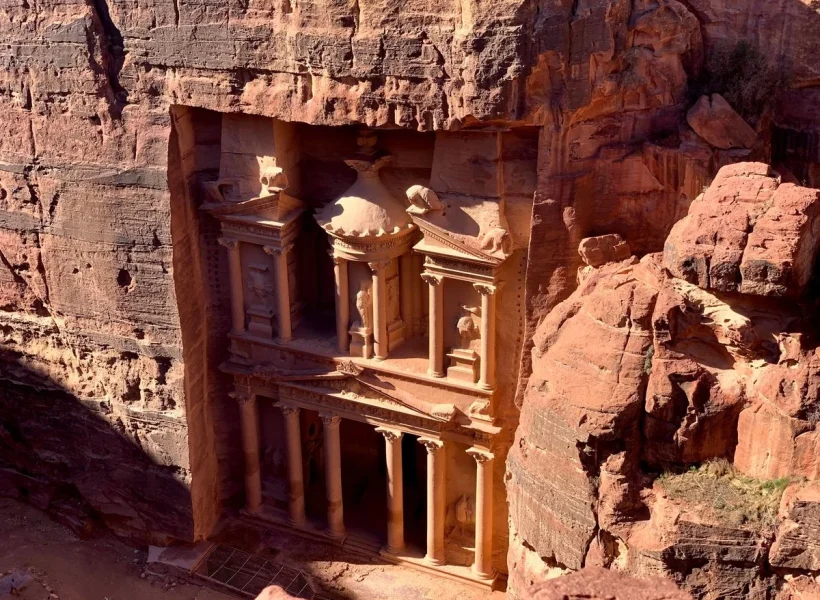
The Treasury, with its beautiful facade carved into the sandstone, is undoubtedly the most important monument in Petra, and certainly one of the most popular tourist attractions in the world. It is a 39-meter-high mausoleum for the Nabataean king Aretas III, carved deep into the sandstone. Alhambra, dating back to the first century BC, and the treasury derives its name from the story that believes that an Egyptian Pharaoh hid his treasure here while he was chasing the children of Israel.
6- Jerash North Theater

One of the most prominent archaeological sites in the city of Jerash, which receives daily large numbers of local visitors and tourists who love history and Roman antiquities. This site was built in the second century AD, specifically in the year 165 AD. This theater can accommodate about 3,000 spectators and features an excellent sound system. This theater still maintains its original shape and design and is used as a central theater in cultural and artistic events held in Jordan, including the annual Jerash Festival, which was established in 1983 AD to contain many distinguished performances.
7- Roman Amphitheater
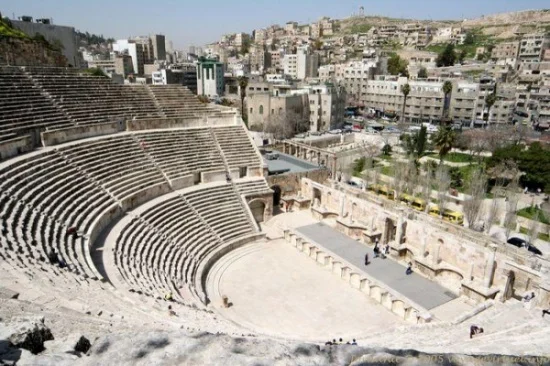
A Roman theater located in the eastern part of the Jordanian capital, Amman, specifically at the foot of Mount Joufeh, on one of the hills opposite the Amman Citadel. A Greek inscription on one of the column platforms indicates that this amphitheater was built in honor of Emperor Adrianus, who visited Amman in the year 130 AD. The Roman Amphitheater was used for theatrical and singing performances due to the quality of its sound system, and it is used to this day sometimes for artistic performances, as the theater can accommodate approximately 6,000 spectators, and to this day it is considered the largest theater in Jordan. There is also a small museum in the amphitheater that tells its history and explains the details of its construction. Travel back in time by visiting the ruins of this majestic amphitheater.
Place address: Roman Theatre, Taha Al Hashemi, Amman, Jordan
8- Abdali Boulevard
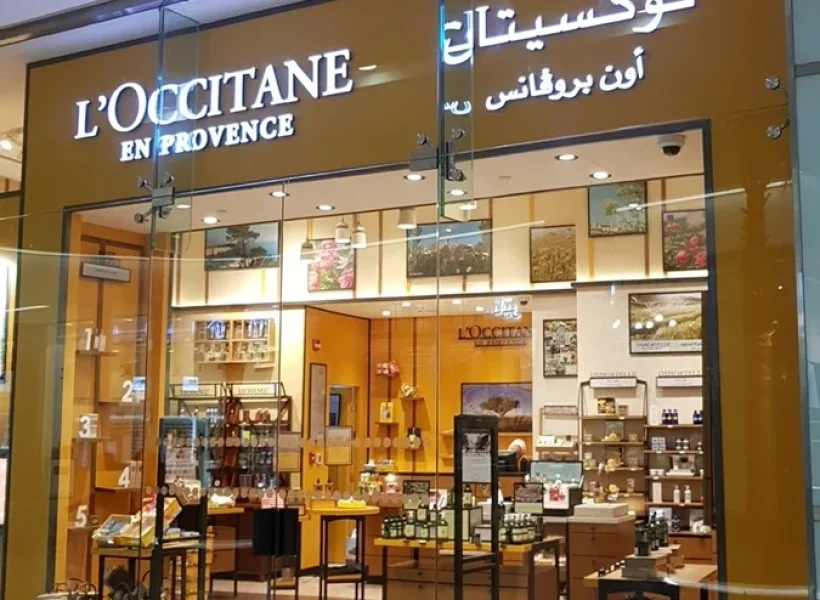
Strategically located in the heart of Abdali, downtown New Amman, Abdali Boulevard is a mixed-use, open-air complex containing twelve multi-functional buildings. These buildings offer unique retail outlets as well as a wide variety of high-quality cafés and restaurants. The center aims to redefine modern life in the Jordanian capital by blending business and contemporary urban lifestyles in such a prestigious area. In addition, the Boulevard includes Abdali Mall, where you will find a huge variety of stores, in addition to entertainment facilities that you will definitely like.
9- Madaba Map
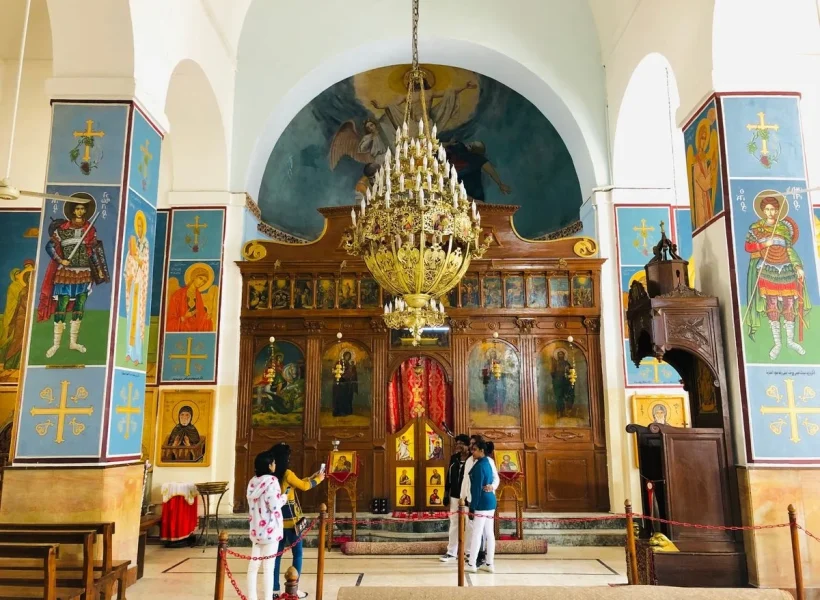
The Madaba Map, also known as the Madaba Mosaic Map, is part of a floor mosaic in the early Byzantine Church of St. George in Madaba in Jordan. Part of the map contains the oldest original cartography of the Holy Land, especially Jerusalem, dating back to the 6th century AD. The Madaba Mosaic Map depicts Jerusalem with the New Church of the Theotokos, which was consecrated on 20 November 542. Buildings erected in Jerusalem after 570 are absent from the depiction, limiting the date range of its creation to the period between 542 and 570. This mosaic was made by unknown artists , most likely to the Christian community of Madaba, which was the seat of the bishop at that time.
Location address: St George’s Greek Orthodox Church, K. Talal St. 30, Madaba, Jordan
10- Jerash Antiques
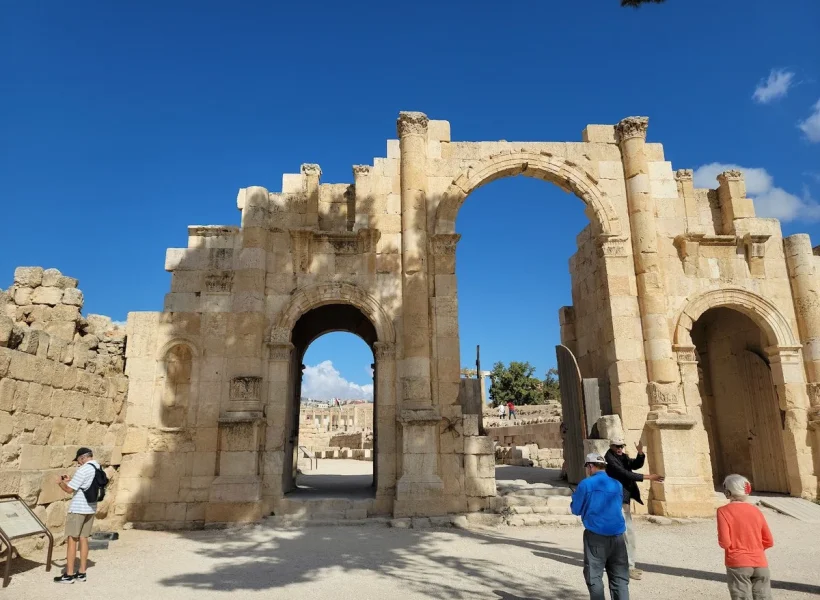
Jerash is a giant historical archaeological city that tells the history of the Romans. Nothing remains of it except the ruins of churches, theaters and corridors. The ruins of the city of Jerash are considered the largest and most interesting Roman sites in Jordan, as tourists from all over the world go to it due to the beauty of these ruins and their ancient history, and the gates tell the story of The majestic celebrations, archaeological roads, temples and theaters tell about the history of the city and the time when it was an important imperial center. If you have an interest in antiquities, even if it is simple, you will definitely enjoy half a day in this beautiful site.
11- Burdah Rock Bridge

Burda Rock Bridge is considered one of the most famous rock bridges in the Wadi Rum desert in Mount Burda. The bridge is located on the northern hills, and is considered one of the highest rock bridges in the world. Tourists and residents visit it by going on a four-wheel-drive tour for an hour and a half in the desert until they reach this bridge and enjoy the wonderful views of Wadi Rum.
Location address: FFFX+CX7, Wadi Rum Village, Jordan
12- Al-Siq
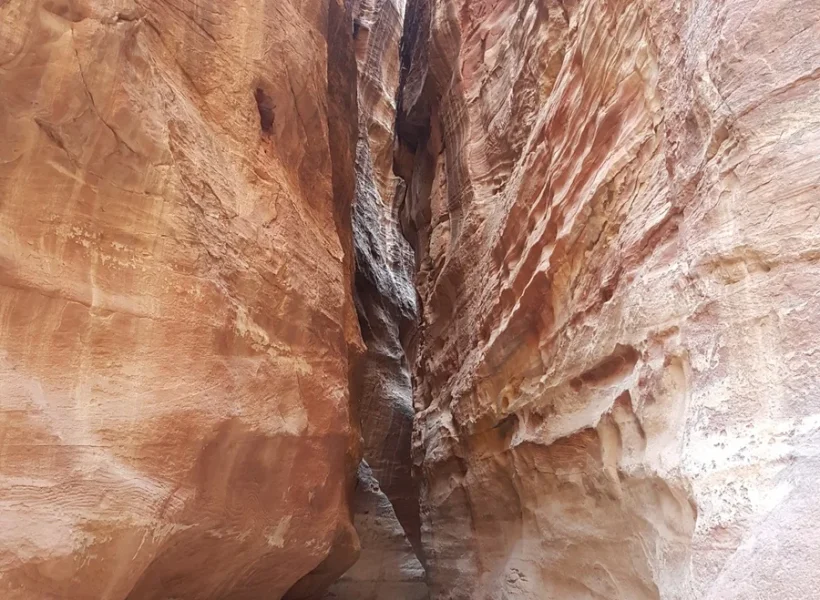
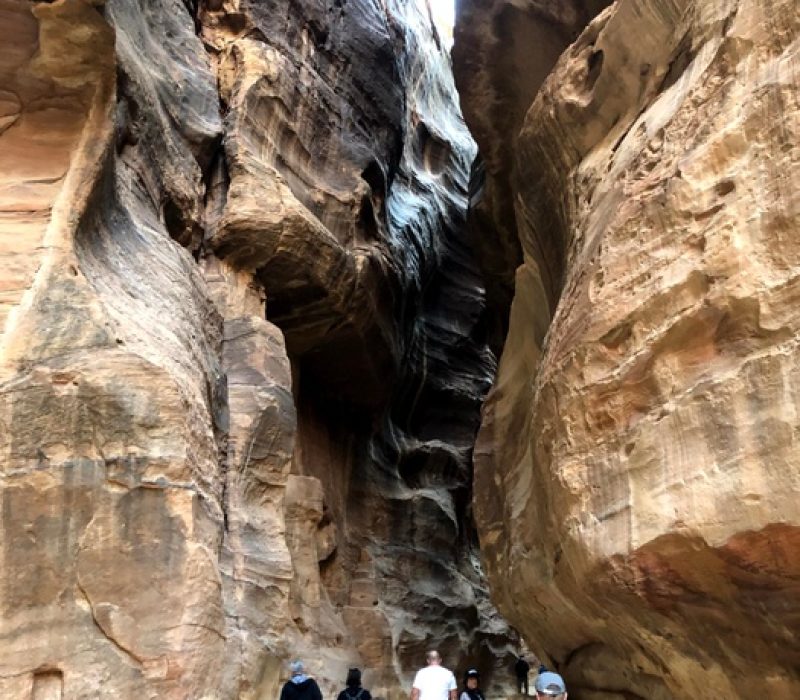
The Siq is a narrow valley that passes through solid rocks along two kilometers to Petra, and its narrow vertical walls are about two hundred meters high. It is undoubtedly one of the most prominent landmarks in Petra, as some historians expect that its basic function was similar to that of ancient Roman roads, as it provides access to… To the hidden city of Petra, full of wonders and interspersed with historical sites of spiritual importance. Besides, on both sides of the entrance you can see some charming remains of ancient niches. Walking through this corridor of breathtaking beauty is considered one of the best adventures and activities that you must experience while touring Petra.
13- Petra World Heritage Site
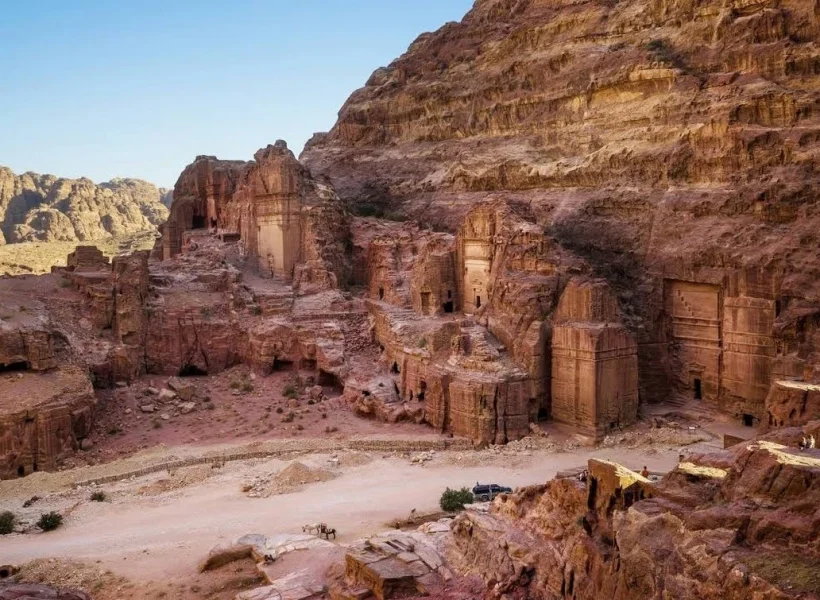
The city of Petra, which is the capital of the ancient Nabataean people, is a UNESCO World Heritage Site and was recently declared one of the New Seven Wonders of the World. This Nabataean Coptic city, located between the Red Sea and the Dead Sea, and which has been inhabited since prehistoric times, is considered an important crossroads between the Arabian Peninsula, Egypt and Syria. These charming ruins carved into the rock, surrounded by mountains full of hidden passages, blend ancient Eastern traditions with Hellenistic architecture. It is truly an enchanting and beautiful site that you cannot miss visiting in Jordan.